How to play guess the flag
The flag of the day sits under six tiles, and one of them starts open. Type a country (the box suggests names as you type) and press Guess. Every wrong guess opens one more tile and adds a row to the list. Six wrong guesses and the answer is shown. The flag is the same for everyone on the same date and changes at your local midnight.
- Distance from your guess to the answer, measured between one reference point per country (most are near the middle of the country, some near the capital).
- Direction to travel from your guess to reach the answer, in eight compass steps.
- Proximity: 100% is the same place, 0% is the far side of the planet (20,037 km). The bar under the row fills to the same percentage: red below 50%, yellow from 50% and green from 80% (about 4,000 km or less).
Colour is never the only signal: a right answer has a ✔, and every row spells out the distance and the percentage.
Using the distance and the arrow
A good first guess is a country in the middle of a large region, such as Germany, Egypt or Kazakhstan. From there the arrow points across one continent rather than across the world, and the distance tells you whether to stay close or jump. Under about 1,000 km usually means a neighbour; over 8,000 km means another continent.
Remember that the distance runs between one point per country. For big countries such as Russia, Canada or Brazil that point can be thousands of kilometres from the border nearest the answer, so treat their distances as rough.
Flags that look alike
Some flags are close to identical when drawn at the same size. When you suspect one of these pairs, guess the more likely one first and let the distance decide.
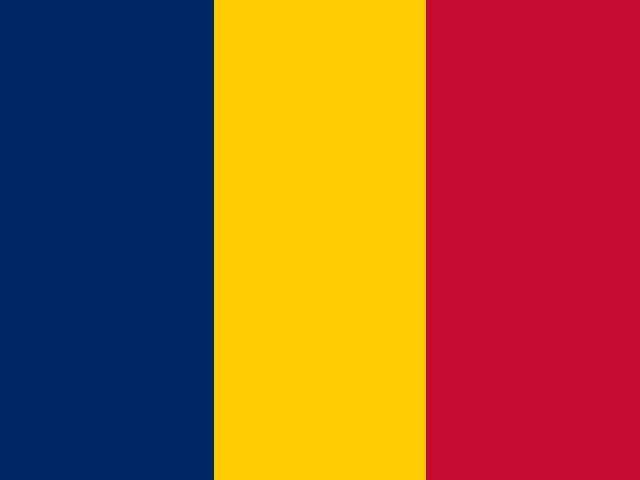 Chad
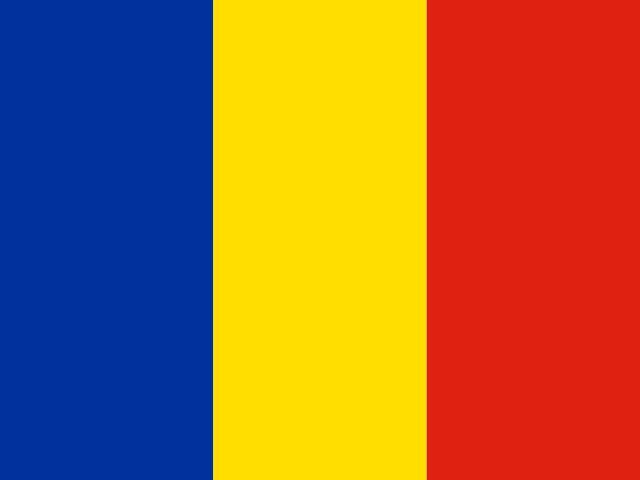 RomaniaSame three vertical bands. Chad’s blue is a shade darker; in practice, use the distance clue.
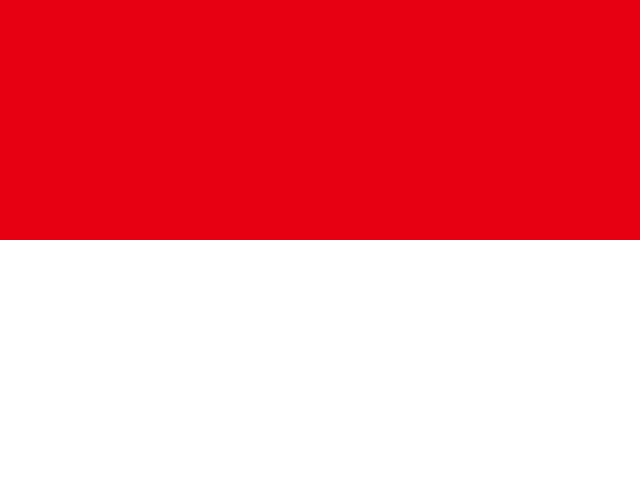 Indonesia
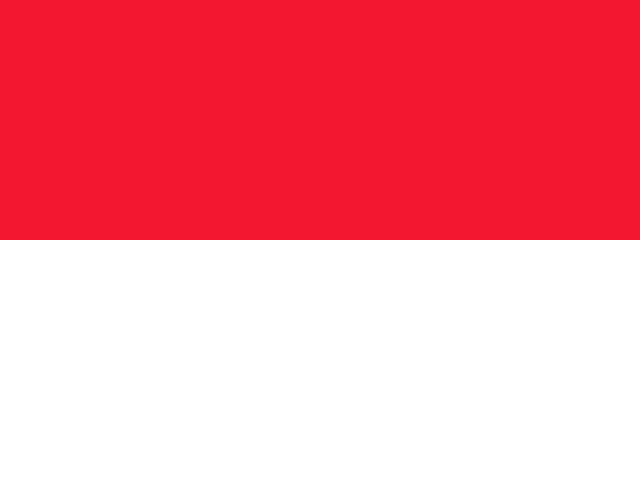 MonacoBoth red over white. Indonesia’s flag is longer (2:3); Monaco’s is squarer (4:5).
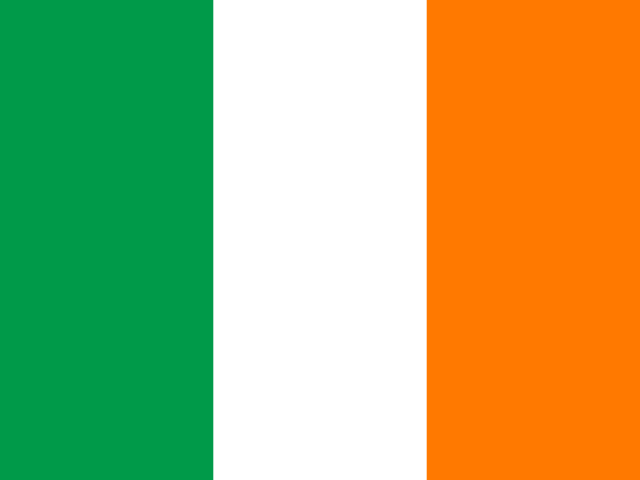 Ireland
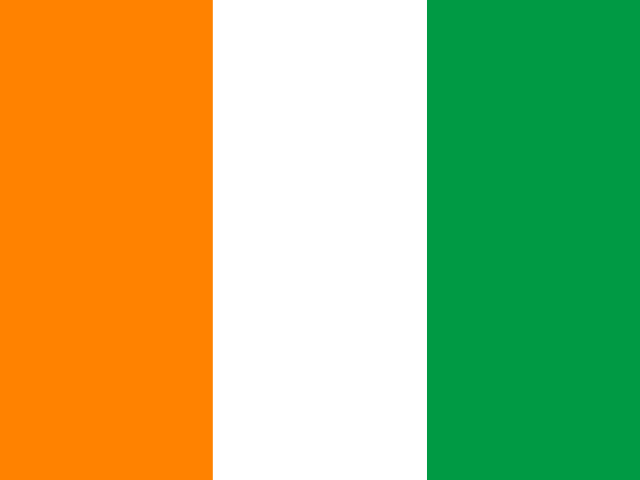 Côte d’IvoireMirror images: Ireland has green next to the pole, Côte d’Ivoire has orange there.
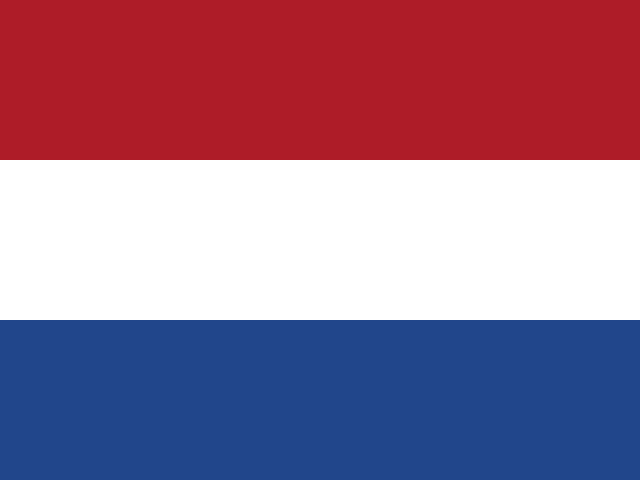 Netherlands
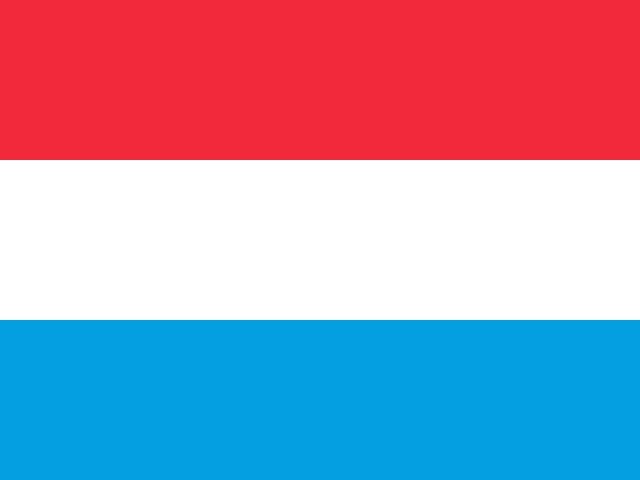 LuxembourgRed, white and blue stripes. Luxembourg’s blue is lighter and its flag is longer.
Flag families worth knowing
Many flags share colours because the countries share a history. Green, yellow and red (the Pan-African colours, taken from the flag of Ethiopia) appear on Ghana, Senegal, Mali, Guinea, Cameroon and others. Black, white, green and red (the Pan-Arab colours) link Jordan, the United Arab Emirates, Kuwait, Sudan and Palestine. A cross set off-centre towards the pole is the Nordic cross of Denmark, Sweden, Norway, Finland and Iceland. Spotting the family narrows the answer to a handful of countries before you have used a guess.
Flags quiz: practice by continent
Below the daily game there is a practice quiz: ten random flags, four choices each, with the right answer shown after every pick and a score out of ten at the end. Choose a continent first to practise only Africa, Asia, Europe, North America, South America or Oceania. Practice rounds do not touch your daily result or your streak.
Which flags are in the game
The game uses 246 countries and territories: every entry with an ISO country code in the open-source flag-icons set, except three uninhabited Antarctic territories. That includes places such as Greenland, Puerto Rico and the Åland Islands, so the answer is not always a UN member. The flag images come from flag-icons (MIT licence) and the reference points from Wikidata.